
HVAC Technician Burnout: The Support System That Doesn't Exist
Alone In The Attic
It's 9:15 AM, and Daniel is staring at a system that should be working.
He's been in the trade for two years now. Long enough to handle most residential calls without backup. Short enough that a "house won't cool" complaint with normal superheat and subcooling triggers his anxiety.
The journeyman who trained him quit three months ago. His service manager is already fielding calls from two other trucks. The customer is expecting answers in 45 minutes.
Daniel does what many technicians do in 2025: he opens Facebook.
The Crowdsourcing Trap
Within fifteen minutes, Daniel has seven responses to his post. Two say add refrigerant anyway. One says dirty evaporator. One asks about duct leakage. One says check the blower speed. Two ask if he measured static pressure.
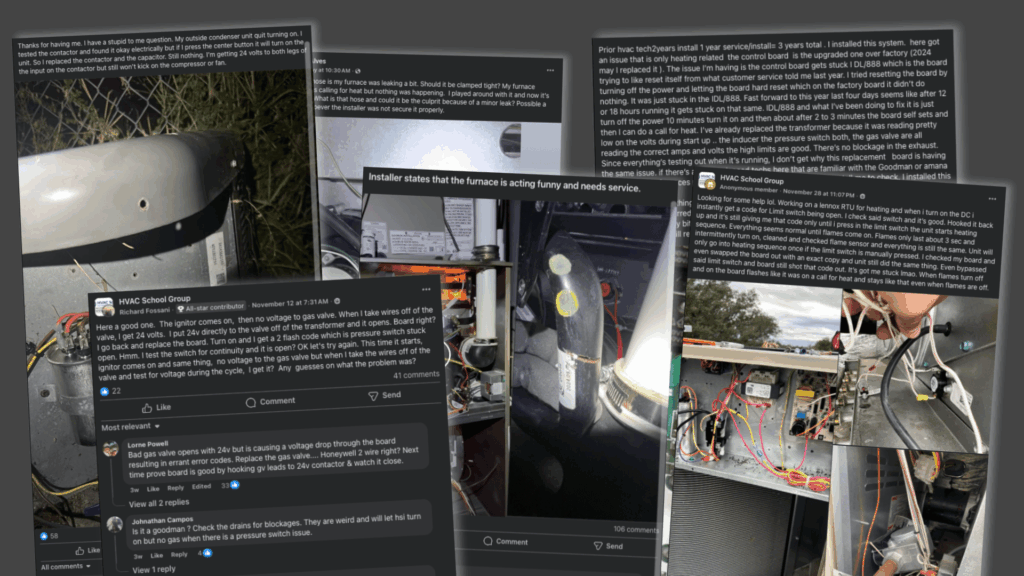
This is the paradox of crowdsourcing technical help: the more answers you get, the less confident you become.
Any of them could be right. But they're diagnosing blind. They see a blurry photo and a partial description. They don't see static pressure readings, temperature splits, airflow measurements, or system history. The information Daniel actually collected evaporates somewhere between his instruments and the Facebook post. As the DOE/Southface study found, even trained technicians struggle with data integrity when information isn't captured systematically.
Meanwhile, manufacturer tech support operates on a callback system. One technician in the HVACschool Facebook group put it perfectly:
"I call AC pro tech support as soon as I walk up on one of their units... I do this to get in queue which can take over an hour. 9 out of 10 times it's solved by the time they call me back."
The technicians aren't failing. The infrastructure is.
The Vanishing Veterans
The people who could help Daniel are disappearing. Half of all field technicians are 45 years or older. Their knowledge retires when they do, and it's retiring faster than it's being transferred.
The industry faces a shortage of 110,000 technicians, a 38% gap between open positions and available workers. Seventy percent of turnover is voluntary. Many cite the same reason: lack of support.
The technicians who could mentor Daniel are too busy fixing callbacks. The industry average callback rate hovers around 12%, and each one costs $400 to $2,500. So the senior techs stay on the road, the knowledge stays locked in their heads, and the apprentices stay alone in attics hoping Facebook delivers an answer before the customer loses patience.
The Real Cost of Being Wrong
Now it's 9:45 AM. Daniel adds half a pound of refrigerant because two people said refrigerant and the pressures were on the lower end of acceptable. Quick fix. Move on.
He's wrong.
The callback comes four days later. Different technician, same house, same complaint. Turns out the return duct had collapsed in the attic, starving the system of airflow. The charge was correct all along. Now it's overcharged, and the original problem remains.
First-time fix rates average 75-77%. One in four service calls requires a return visit. Bottom-performing technicians cost 67% more per resolution than top performers.
But the human math is worse. Daniel doesn't just lose $850 on that callback. He loses confidence. Sixty-five percent of customers leave after a single bad experience. Daniel didn't just cost his employer a callback. He may have cost them a customer for life.
The Isolation Cycle
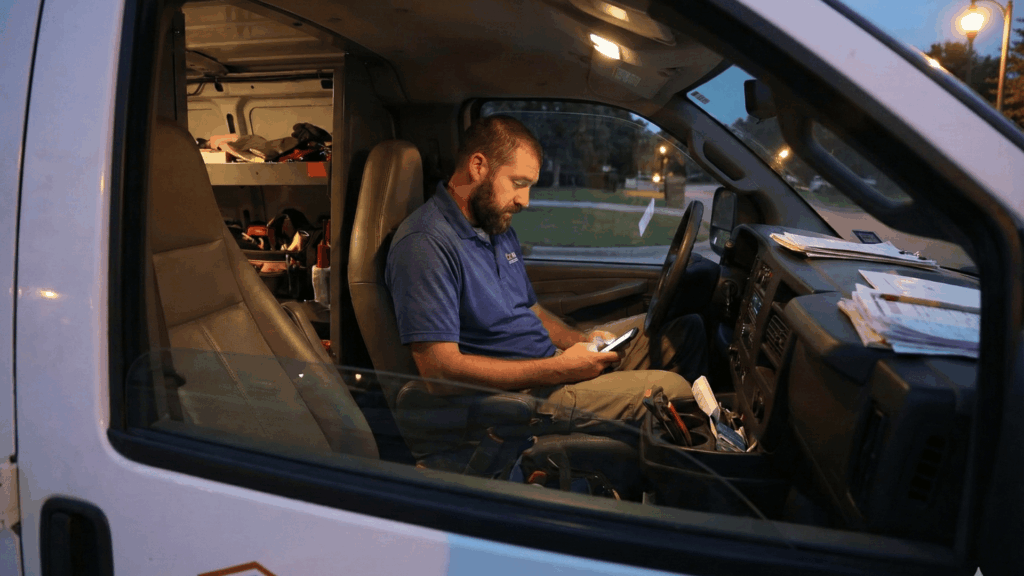
This is the cycle that drives technicians out of the trade: Isolation leads to crowdsourcing. Crowdsourcing leads to conflicting advice. Conflicting advice leads to uncertain decisions. Uncertain decisions lead to callbacks. Callbacks lead to shame. Shame leads to more isolation.
One Reddit post captured it:
"Mentally exhausted. Residential service. How on earth does anyone do this career their whole life? I feel like I'm about to have a breakdown after only 7 years."
Sixty percent of technicians under 45 say they may not stay in field service long-term.
It's Not Just About the Tools
Daniel isn't just stressed because he doesn't know the answer. He's stressed because the stakes are high and his support is low. And that support gap goes deeper than diagnostics.
We hand Daniel a $50,000 van and ask him to troubleshoot complex systems for roughly $28 an hour. CareerExplorer ranks HVAC technician happiness in the bottom 29% of all careers surveyed. The work scores well for "personality fit," but "meaningfulness" and "work environment" drag the average down. This suggests a culture problem, not a skill problem.
Then there's the apprenticeship pipeline. We call it "paying your dues," but the data calls it a coin flip. Nearly half of all apprentices quit before certification, often because "figuring it out alone" isn't a training strategy. It's hazing dressed up as tradition.
Technology solves the information gap. It doesn't solve the compensation gap or the culture gap. But high-support cultures are easier to build when the technical chaos is tamed.
The Infrastructure We're Missing
When diagnostic data stays trapped in a gauge set while expertise sits in an office, you've got a supply chain failure.
Think about how medicine handles this. A paramedic measures vitals, documents findings, and transmits information to the ER before they arrive. The emergency room doctor sees real data, not a verbal description filtered through stress and memory.
HVAC has no equivalent infrastructure. Daniel's service manager has zero visibility into what he's seeing. The senior tech three trucks over can't look at his readings.
This is the problem measureQuick was built to solve: systematizing HVAC science and harmonizing outputs from whatever instruments a technician already owns. The platform captures readings, runs calculations, and presents a unified picture of system health that any qualified person can interpret.
TestTracker takes this further. A technician shares their live diagnostic session with anyone who has the link. Service managers verify readings before a tech leaves the job site. Senior technicians mentor five apprentices from the office instead of riding along with one.
The DOE study found systems commissioned with measureQuick achieved 90.5% of total normalized capacity. The information gap can be closed. But closing it is only part of the answer. The companies that retain technicians will also close the compensation gap, the culture gap, and the mentorship gap.
Daniel deserves better than seven conflicting answers on a Facebook post.
He also deserves fair wages, structured mentorship, and a company that treats his development as an investment rather than an inconvenience.
Both things can be true. Both things need to change.