
Margin is a measurement problem.
In a market this crowded, the instinct is to win on price, so the bid gets thinner and the margin goes with it. The money you are leaving sits past the bid: in the callbacks you pay for twice, the tickets that close low because the homeowner never saw the problem, and the service histories you never kept. Each one is a number you can measure, and a number you can get back. measureQuick puts one standard diagnostic on every truck, so the fault gets caught, the repair gets proven, and the record stays yours.
-
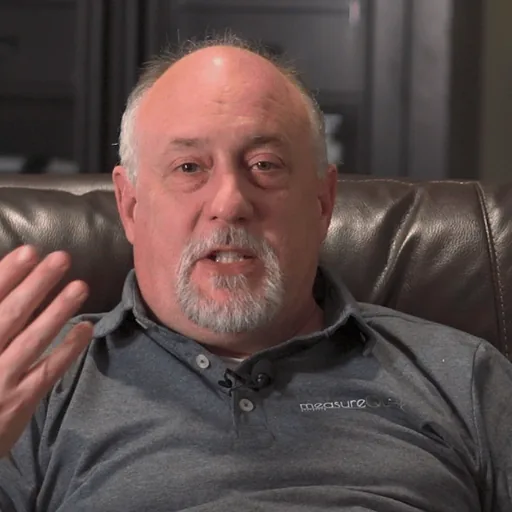 Built by Jim Bergmann
The founder and the field's most-cited diagnostics educator.
- NIST-tested science
Lab-grade accuracy at 10x lower cost and 100x simpler deployment.
- Works with your tools
80+ tools across 17+ brands you already own.
Where the margin goes
The pressures on a service business all land on the same line. Most of them stay invisible until the quarter closes.
- The callback you pay for twice: the marketing dollar to win the customer, then a second labor hour in July to fix what the first visit missed. About $650 a service call, $850 an install (ACCA).
- Competing on price against national chains and PE roll-ups, with nothing but the bid to set you apart
- Tickets that close low because the homeowner could not see why the repair mattered
- Quality that swings with the tech, and no way to scale it without veterans you cannot hire
- Warranty rework you eat because you have no record of how the system ran at startup
What you get
Catch the callback before it leaves the driveway
An out-of-spec system gets flagged on the first visit, before the customer calls back next week. Brynn Cooksey, who owns Air Doctors and runs about 20 trucks, did the arithmetic for his shop: "every callback that we save... we did the math. So one callback is like a thousand bucks." One prevented callback, about $650 for service or $850 for an install (ACCA), covers a Premier seat for the month with room to spare.
Raise the ticket without selling harder
A documented reading and a letter grade show the homeowner why a repair is needed, so the average ticket grows on the proof they can see. Jacob Oppelt, who owns Best Neighbor Home Services, puts it plainly: "If you don't double your ticket averages on measureQuick, I don't know what you're doing." One New York technician documented duct and static-pressure problems homeowners had never seen and moved his summer average from $2,800 to $4,600 a ticket, close to a 50% lift, without leaning harder on the close.
Build the asset you sell
Every commissioned system becomes part of a service history you own. That database of documented systems and recurring customers is an asset a buyer pays for when you sell the company, worth more than the filing cabinet it replaces. It defends a warranty dispute today and raises the multiple tomorrow.
Win the warranty argument
Manufacturers reserve more than $787 million a year against failures the field research says are mostly install-driven (Warranty Week). Without a record, tech support assumes you are one of the installers who got it wrong. Cody Brasseal, who owns Acadiana Comfort, hands over a startup report and, in his words, it "immediately moves that conversation to a point where you're standing on level ground now... I'm no longer in that 75%."
Recover a whole salary
At Genz-Ryan, callbacks were such an accepted cost that the company staffed a full-time technician whose only job was to run them. After measureQuick went on every truck across their 47 technicians and the out-of-spec systems got caught on the first visit, the callbacks stopped and that position was eliminated. For an owner, that is a headcount line that comes off the P&L, hard money you can see on the ledger.
Grow the crew and hold quality even
In a labor-short market you cannot hire your way to consistency, so the lever is making the techs you have run the same way. One standard diagnostic on every truck lets a junior tech run the same scored test your best tech does. Ecoplumbers grew from zero to 40 HVAC technicians in two years giving every new hire the same workflow the top performers already used.
How the margin comes back
- 01
Measure
Every tech runs the same scored diagnostic off the probes they already carry, so the system's real condition lands on the record where anyone can pull it.
- 02
Document
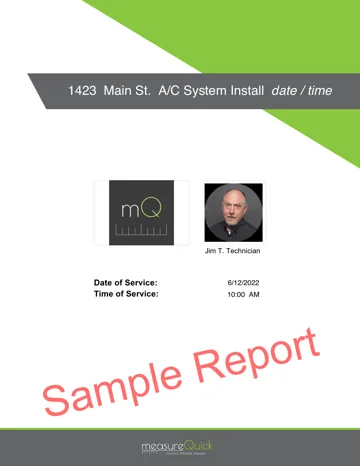
The finding becomes a branded, letter-graded report the homeowner can see, which is what turns a recommendation into an approved repair.
- 03
Recover
The out-of-spec system gets fixed on the first visit, the ticket reflects the work the report justified, and the callback truck stays parked.
- 04
Keep
Every report joins a service history you own: a warranty defense, a referral artifact, and an asset on the balance sheet when you sell.
What owners report
callback rate at Simpson Salute, down from the 4% range, while the shop grew from $3.8M to about $17M in three years.
added in one season at Jones Services from five techs fresh out of school who ran measureQuick on 656 calls and closed 53%.
callback rate at Air Doctors, down from 3 to 4% once measurement became mandatory. 20 trucks.
Results reported by the named contractors from their own use of measureQuick. Your results will vary by team, market, and workflow.
“My return of investment on, just on the installation alone, paid for itself in a minute... I don't mind paying the $5 fee for one year subscription for each system. That's a no-brainer for me.”
Questions, answered
How fast does this pay for itself?
Premier is $49 per user per month, no long-term contract. A single prevented callback, about $650 for service or $850 for an install (ACCA), covers a seat for the month with room to spare. Run your own callback rate in the ROI calculator: your rate, times calls per quarter, times cost per callback, is the annual bill you are cutting.
Will my techs actually use it?
It runs on the probes they already own, and most diagnostics start without breaking into the refrigerant circuit, so it fits how they already work. 100,000+ technicians run the platform today.
How does documented work turn into revenue?
A scored finding with a photo is a recommendation the customer believes, so upgrades and service agreements close on the proof they can see. As one service manager put it, the ticket grows because the report shows the homeowner how the system is working.
We are a small shop. Is this only for big companies?
No. Air Doctors runs 20 trucks and the callback math works the same at any size. Start free, then add paid seats as the team adopts it.
Does it lock me into one brand of tools?
No. measureQuick works with 80+ tools across 17+ brands, so it protects the probes you already bought and adds no new kit.
The report behind the numbers
The ticket lifts and the callback math above all run through one artifact: the branded report your techs hand the homeowner. See how the cloud builds it, then download a sample and read what your customer keeps.
Run the numbers, then talk to us.
Use the ROI calculator on your own callback rate, then book a demo to see it on your operation.