
Spring Shoulder Season HVAC Playbook: Three Plays That Pay Off All Summer
The window is shorter than it looks
Heating calls have stopped. Cooling calls have not started. Phones are quiet. Across the industry, this is the stretch where revenue dips and most shops either coast or chase maintenance renewals. Both responses miss what the shoulder season is actually for.
The work you put into the truck, the team, and the customer in May determines what your callback rate looks like in August. Recurring service agreements have become the load-bearing wall of most healthy residential HVAC P&Ls, and BDR's planning research suggests well-run shops target roughly 250 active agreements per million dollars of service sales with retention rates above 90% (BDR, 2026). The peak-season decisions that hurt margins, like missed restrictions, undercharged systems, and inconsistent diagnostics across techs, are made up of habits that get formed (or fixed) during the quiet weeks.
Here are three plays worth running before the phones ring off the hook.
Play 1: Standardize the truck before the work doubles
Service managers running ten or more trucks see callback rates around 12%. The ones who run identical, documented workflows on every call land closer to 4.8%. The difference is not skill; it is process. When every tech on the truck performs the same eight checks in the same order, quality stops being a personality trait.
The shoulder season is when you have time to sit with senior techs, write down what "good" looks like for your company, and turn it into a checklist. That sounds simple until you try to enforce it. Paper checklists end up in the cab. Generic app templates do not match your SOP, your brand promises, or the equipment you sell.
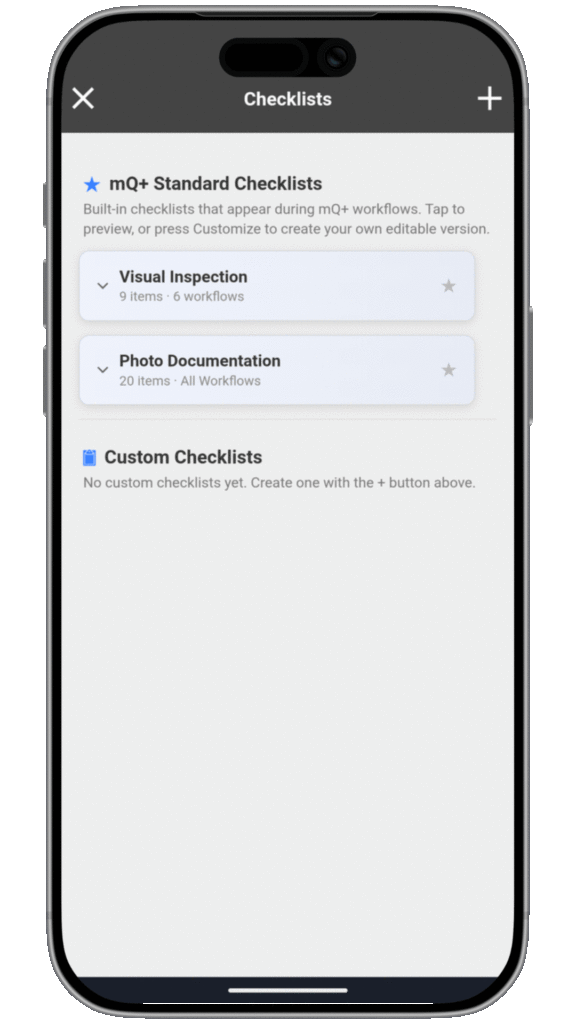
This is where custom checklists in measureQuick earn their keep. Company administrators build the checklist once and deploy it to every technician in the organization. Items support checkboxes, photos, and short annotated video clips that embed into the customer-facing report as a scannable QR code, so the homeowner or property manager can watch the field documentation themselves. If your shop already has a binder full of SOPs (commissioning protocols, maintenance procedures, install acceptance criteria), they map directly into a measureQuick checklist instead of sitting in the back office.
Use this window to do three things. First, have your senior tech write the SOP for a standard cooling tune-up the way he actually performs it. Second, get it into a custom checklist before the schedule fills. Third, run two ride-alongs to refine the wording. By June you will have shipped the change while the rest of the market is still arguing about it on Facebook.
Play 2: Add a static pressure screen to every visit
If your maintenance technicians are not pulling a Total External Static Pressure reading on every cooling system they touch, you are walking past money on every call. Real-world field data backs that up. Across more than 151,000 measureQuick tests with static pressure coverage, 70% of systems exceed 0.5 inches of water column total external static pressure and 47% exceed 0.7 inches. That is not a regional outlier. That is what the installed base looks like.
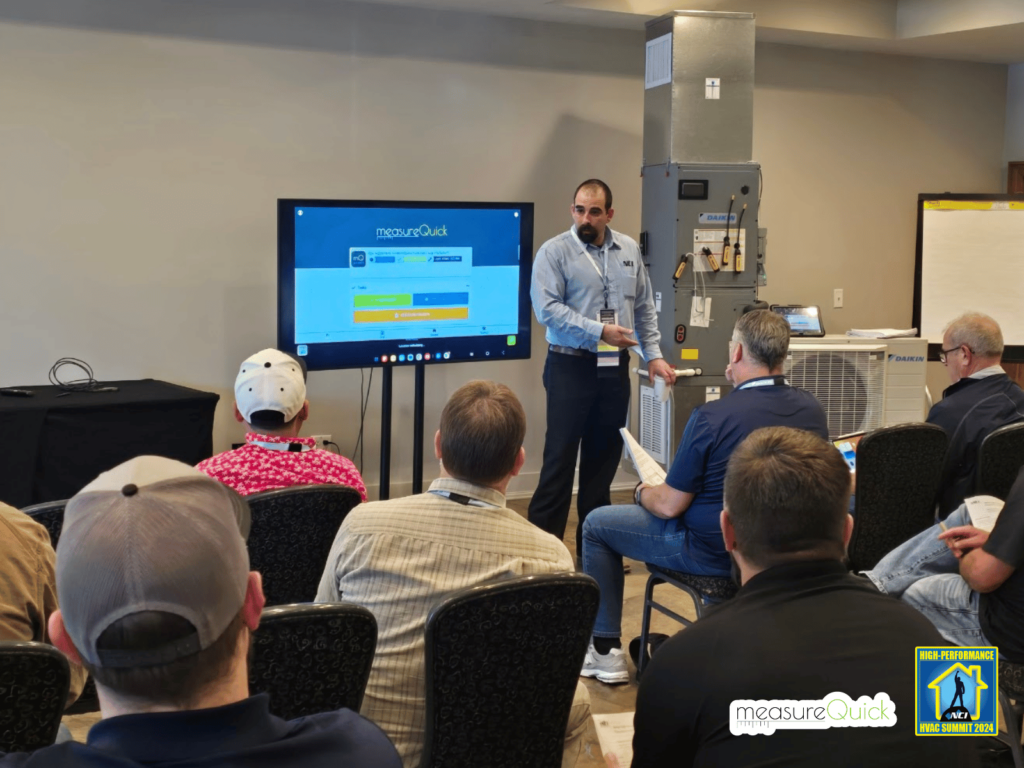
The National Comfort Institute teaches a static pressure screening method that a competent tech can run in under five minutes per call (ACHR News). Two test points (one across the air handler, one across the coil and filter), a quick comparison against the manufacturer's rated pressure drop, and the tech has a defensible story before he leaves the driveway. Restricted filter? Crushed return? Undersized trunk? Each is a real problem with a real fix, and each one is a conversation about an Air Upgrade or duct repair instead of a generic "your system is old."
Why now? Two reasons. First, your senior techs have time to teach the screening to your less experienced techs without losing a service slot. Second, customers approve duct work in May. They do not approve duct work on July 14 when their living room is 82°F and they want the AC fixed yesterday.
If you have not built the screening into your maintenance workflow, the spring lull is the deadline. measureQuick captures the pressures, calculates the budget against the equipment's rated drop, and renders it on the report so the conversation with the homeowner does not depend on the tech's sales skills.
Play 3: Use the cold mornings, charge the right way
Spring is also when techs get burned on commissioning. The new install goes in on a 52°F morning. The condenser will not load up. The tech reads suction and head pressures that look reasonable, calls the charge "good enough," and drives off. Three months later the customer calls because the house cannot hold setpoint at 95°F outdoor.
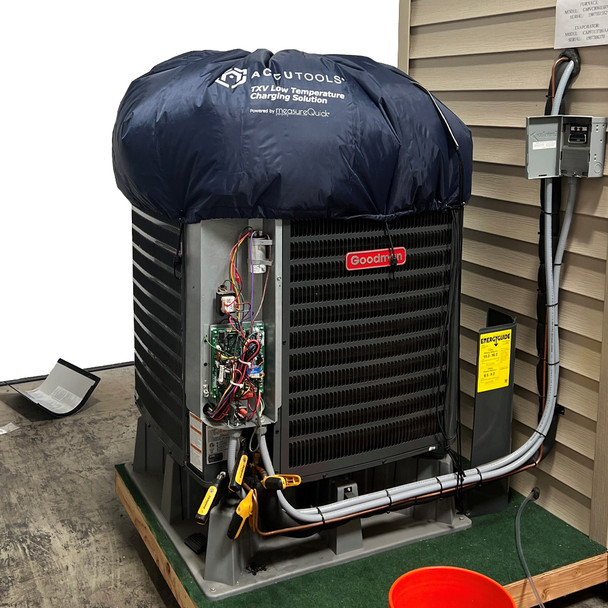
Below roughly 65°F outdoor, traditional superheat and subcooling targets get unreliable because the condenser will not develop enough head pressure to keep the metering device happy (HVAC School). The fix has been around for years and still gets skipped: a charging blanket (or condenser jacket) restricts airflow across the outdoor coil, drives the high side back into a normal saturation range, and lets the system stabilize so the tech can actually verify charge. Many techs use a 100°F to 110°F condensing temperature as the working target.
Across measureQuick's diagnostic data, refrigerant charge fails verification on roughly 45% of cooling tests, and piston-metered systems fail at 56%. Cold-weather installs are a known contributor: when the high side will not climb, target subcooling and superheat numbers stop being meaningful, and "good enough" becomes a callback waiting to happen. That is not a tech competence story. It is a procedure story. Pair the charging blanket with measureQuick's cold-weather charging workflow and the system gets commissioned to spec on day one instead of being "tuned up" the following spring.
If you are putting in heat pumps this spring (and full-year 2025 heat pump share hit 47% of residential cooling installs in the measureQuick dataset), the charging blanket conversation matters even more. A heat pump charged in cold weather without restricting the outdoor coil is a callback on a stick.
What this looks like by July
Run the three plays and the math compounds.
A team that follows a single custom checklist produces consistent reports. A team that screens static pressure on every visit closes more duct and Air Upgrade work. A team that commissions cold-day installs correctly carries fewer warranty calls into peak season. None of those are revolutionary moves on their own. Stacked, they show up in the metric every owner actually cares about: revenue per call, callback rate, and net promoter score, all moving in the right direction at the same time.
The shoulder season is short. The decisions that get made in it are not.
Want a deeper read?