
The Science Behind Catching Dust
By Adam Mufich, National Comfort Institute (NCI)
Recommending the cheapest, least restrictive filter is the most common "fix" in residential HVAC. It is also the wrong answer for most homes. Here is the science behind why bigger filter media, not thinner media, protects both equipment and indoor air quality.
If I had a nickel for every time I heard a contractor recommend their customers use the least restrictive filter available, I would have an impressive pile of nickels. This advice is common among residential HVAC technicians. In fact, I have made this recommendation myself.
If everyone is saying it, then it must be true, right? Well, I guess the answer is the one that usually makes people cringe. It depends. Before we dive in, let's go over why this recommendation is so common.
First, most air-moving equipment operates with low airflow and high static pressure. Low fan airflow will cause a low coil temperature in cooling mode, which could cause freezing and liquid floodback to the compressor. A gas furnace in heating mode will have a high temperature rise (∆T), which will stress the heat exchanger.
Technicians figure out ways to make the equipment work in not-so-ideal situations, like the one I just mentioned. The problem is, recommending a cheap, unrestrictive air filter is like treating brain cancer with Tylenol. It might take the edge off, but ultimately the disease is still there, and the future is grim.
Filter Types, Ratings, and Pressure Drops
A fiberglass filter is the least restrictive one-inch filter you can use. The media has bigger holes for air to flow through. An easy way to visualize this is to compare air filters to a yard fence. In this example, a chain-link fence acts like a fiberglass filter, while a wooden panel fence acts like a pleated filter. Air can move through each fence, but the chain-link fence allows air to pass with less resistance.
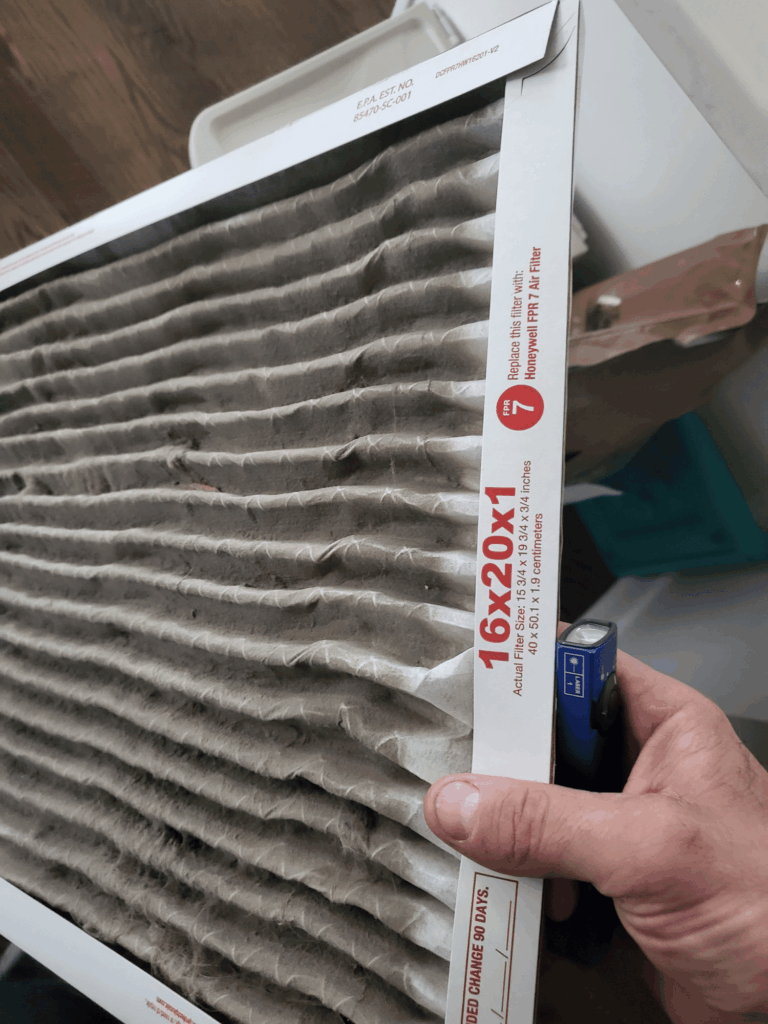
In 1987, the American Society of Heating, Refrigerating and Air-Conditioning Engineers (ASHRAE) developed the Minimum Efficiency Reporting Value (MERV) to rate air filters. MERV ratings range between 1 and 16 and can be difficult to find printed on the filter itself.
Some filter manufacturers have their own rating system. For example, Home Depot uses a Filter Performance Rating (FPR) on a 1 to 10 scale, while 3M uses the Microparticle Performance Rating (MPR), which describes performance against particles in the 0.3 to 1.0 micron range. Confusing, right?
For the sake of simplicity, let's focus on MERV ratings. The higher the MERV rating, the better the filter is at capturing particulate. However, the higher the MERV rating, the more restrictive the filter is. In other words, filters with a high MERV number have a higher pressure drop than filters with lower MERV ratings.
Filter pressure drop affects the air-moving equipment's Total External Static Pressure (TESP), which can impact fan airflow and blower motor electrical consumption. (For a primer on TESP and how to measure it on every call, see my earlier post on getting started with static pressure diagnostics.) Now do you see why techs often recommend the least restrictive filter available as a quick fix? But what if your customer cares about filtration and Indoor Air Quality (IAQ)? Is a MERV 11 filter good enough? For a deeper look at the trade-offs between media, sealing, and bypass, measureQuick's overview of proper HVAC filtration is a good place to start.
Size Matters
There are two ways to think about the relationship between filter size and pressure drop. The first is the filter's surface area (length x width). The second is the depth of the filter. You can reduce a filter's pressure drop if you increase the physical area of the filter. You can also reduce a filter's pressure drop if it has deeper pleats for air to pass through. The more surface area a filter has, the lower the pressure drop at the same airflow.
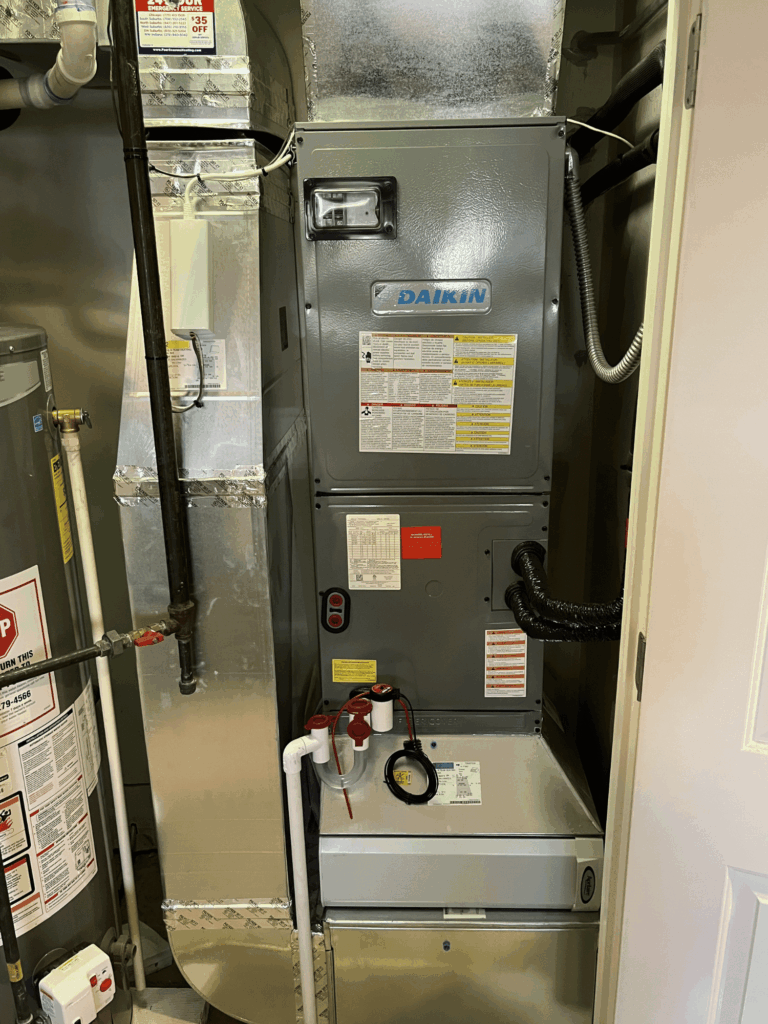
Instead of prescribing Tylenol for brain cancer, consider recommending an NCI Air Upgrade™. Most technicians struggle to size filters correctly. In fact, I think they put more emphasis on whether the filter fits easily into the air-moving equipment's cabinet. Rightfully so, there are only a few resources that provide any guidance.
When designing a filter on a new duct system, size it using the rated pressure drop when completing the Friction Rate Worksheet from ACCA's Manual D. If you're replacing existing equipment, determine your target TESP and size the filter based on NCI's Static Pressure Budgets using Fan Law 2. To learn more about the process, check out an article I wrote for HVAC School titled "Replacing Residential HVAC Equipment With Predictable Results," along with the rest of my HVAC School library.
Diffusion Is an IAQ Solution
Imagine dust particles traveling through a return duct. As air velocity increases, dust particles tend to move in a straight line. However, as air velocity in the duct decreases, the dust particles tend to move around more and lose their ability to travel in a straight line.
When you increase a filter's surface area, air velocity decreases and causes dust particles to zig zag in the air stream. Because of this action, the chances of dust running into a filter fiber and getting stuck by electrostatic attraction increase. This is the basis of diffusion. Slowing down the airflow increases the effects of diffusion and increases the capture rate of an air filter. Pretty neat, right?
When it comes to sizing air filters, go big or go home. There are no negative effects of increasing filter size. A good rule of thumb is to design for a maximum face velocity of 300 Feet Per Minute (FPM). This will usually result in an extremely low filter pressure drop. The IAQ payoff is real, especially as homes get tighter and HVAC systems take on more of the moisture and ventilation work that older, leakier homes used to do passively. (For more on why that matters, see measureQuick's piece on the moisture challenges of modern, electrified HVAC systems.)
Don't Fear High MERV Filters
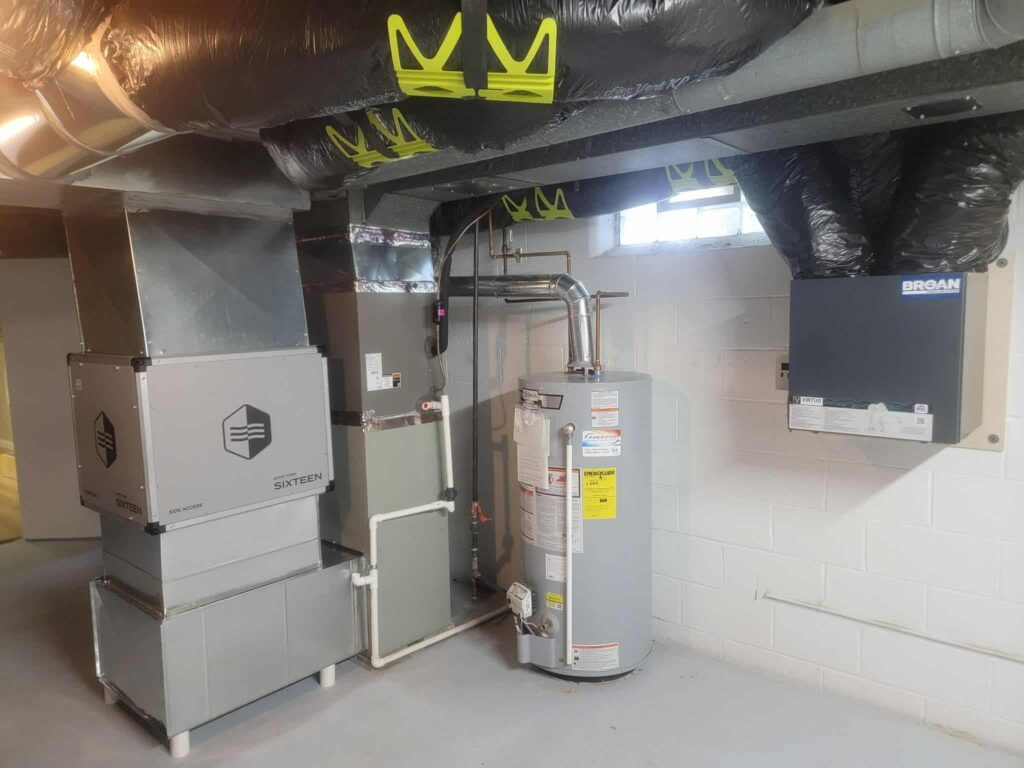
Spend the time to size filters correctly using pressure drop and target TESP, and you will not have issues using a high efficiency filter. As an example, I have an IQAir Perfect 16, MERV 16 filtration system on my home HVAC system. The filters just celebrated their third birthday. Most techs would assume that my filter pressure drop and TESP must be off the chart.
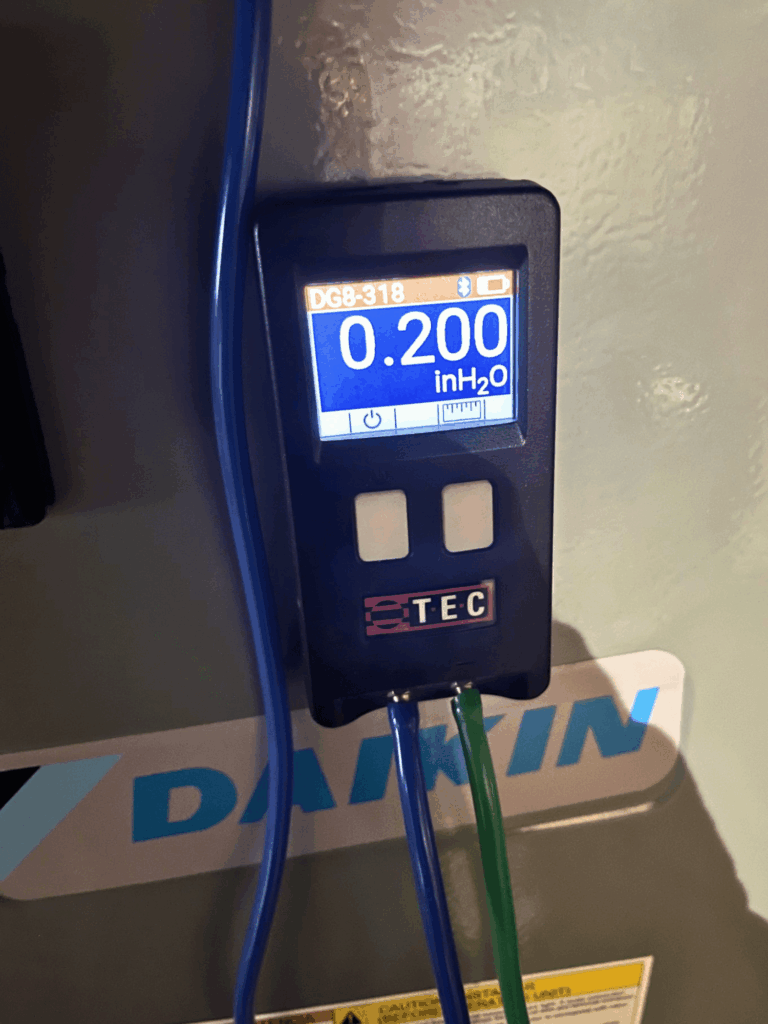
In reality, my measured TESP with three-year-old filters is 0.20 in. w.c. on high fan speed, captured on a TEC DG-8 digital pressure gauge paired into measureQuick. You might be wondering how that is possible. It is because I'm running a one-and-a-half ton heat pump on a three-ton duct system with IQAir's five-ton filtration system. I could probably get a few more years out of those filters.
I know this sounds like an impossible, far-fetched fairy tale, and to that I will respond like a politician: trust me. While my situation might depict an extreme example of what is possible, it is not difficult to design a low-static system with a properly sized filter. Once you understand the process and the math, you can confidently install high efficiency filters for your customers, improving their IAQ and increasing their system's performance.
Sized correctly, a high MERV filter is also a recurring revenue opportunity, not a callback waiting to happen. Programs like measureQuick's filter fulfillment integration make it easy to put the right filter on a recurring schedule once you have done the engineering up front. And if you want proof that the rest of the install is pulling its weight, the same diagnostic discipline is what closes the gap between 57% and 90% of rated capacity that separates startup from real commissioning.
About the Author
Adam Mufich is an instructor, a member of the curriculum development team, and a podcast host for National Comfort Institute (NCI). Adam owned and operated a residential HVAC company in the Chicago suburbs that specialized in High-Performance HVAC™ contracting. If you're an HVAC contractor or technician interested in learning more about NCI's training, contact Adam here. NCI's website is full of free information to help you improve your professionalism and strengthen your company. Visit HVAC Today to read more articles like this or listen to the High-Performance HVAC Podcast.