
Meet HITMAN™: A Measurement for the Hardest Call in Heating Season
TL;DR: measureQuick 3.6.5 brings the Heat Exchanger Integrity Test (HITMAN™) out of beta for Premier Services subscribers. A Testo 405i hot-wire anemometer sits in a heat exchanger cell, and a clamp meter reads blower current. The app reports whether the air in that cell moved when the blower did, so you know which cell to inspect. The test augments AHRI Guideline X. Jim Bergmann demonstrates it in the video at the end.
Heating season is here, and measureQuick 3.6.5 is a heating release. The short list:
- Heat Exchanger Integrity Test (HITMAN™): out of beta, for Premier Services subscribers. The rest of this post is about it.
- Guided combustion capture: the combustion panel walks through Start, Capture, and Remove Probe. It checks that readings are stable before capture and runs a 30-second purge on its own.
- Ambient CO severity: ambient CO shows a level of Elevated, Dangerous, or Emergency.
- Two-stage furnaces: benchmarks run at high fire, and manifold readings are tagged High Fire or Low Fire.
- NCI workflows in mQ+: ComfortMaxx and HeatMaxx run in mQ+ for Premier Services companies.
Everything else in the release is on What's new in measureQuick.
What a Compromised Heat Exchanger Does
A furnace heat exchanger keeps two air streams apart. Combustion gases run inside the cells. House air runs across the outside. When a seam splits or a hole opens, that separation is gone.
The damage works in two directions. A compromised heat exchanger is a pathway for carbon monoxide into the house air. It can also become a source of carbon monoxide, because blower air pushing into a cell can disturb combustion. That is why the inspection is one of the most consequential things a furnace tech does all winter.
What AHRI Guideline X Asks You to Watch
The trade has a published procedure for this work. AHRI Guideline X covers the inspection of induced draft furnace heat exchangers. The current edition is from 2023, and the PDF is free from AHRI.
The guideline lays out a five-step method. The first step, 4.1, reads:
"Start the furnace and observe any changes in the flame pattern as the circulating air blower starts operating. Look for floating flames, flame roll out or flame distortion. These conditions can indicate one or more of the following conditions: split seam, open crack, severe deterioration of the heat exchanger or gasketing material, or physical separation of the connected parts."
The later steps measure CO in the airstream and the flue, check the installation, and end with a visual inspection of the heat exchanger.
The logic of that first step is sound. The blower pressurizes the air side of the heat exchanger. If there is an opening, blower air enters the cell and the flame shows it.
The trouble is the view. Open the burner compartment of a modern furnace and see how much flame is visible. On a compact furnace there is very little. The step depends on a clear view that many furnaces no longer give you.
The Problem of Uncheckable Findings
A flame observation lives in one person's eyes for a few seconds. It leaves no trace, and the next tech cannot replay it. Two competent techs can watch the same furnace and come away with different answers.

Every heating season the same posts appear. A furnace is taken out of service for a cracked heat exchanger. The homeowner asks for a second opinion. The second tech finds nothing, and the first tech's judgment gets questioned in public.
Read those posts from the first tech's side. You saw the flame move. You made the call you are supposed to make. The first tech may well have seen something the second one did not, and there is no record to show it.
A call with those stakes deserves a measurement another tech can repeat and a manager can read later.
The Instrument: A Hot-Wire Anemometer
A hot-wire anemometer measures air speed with a small heated sensor. Moving air cools the sensor, and the instrument reads how much.
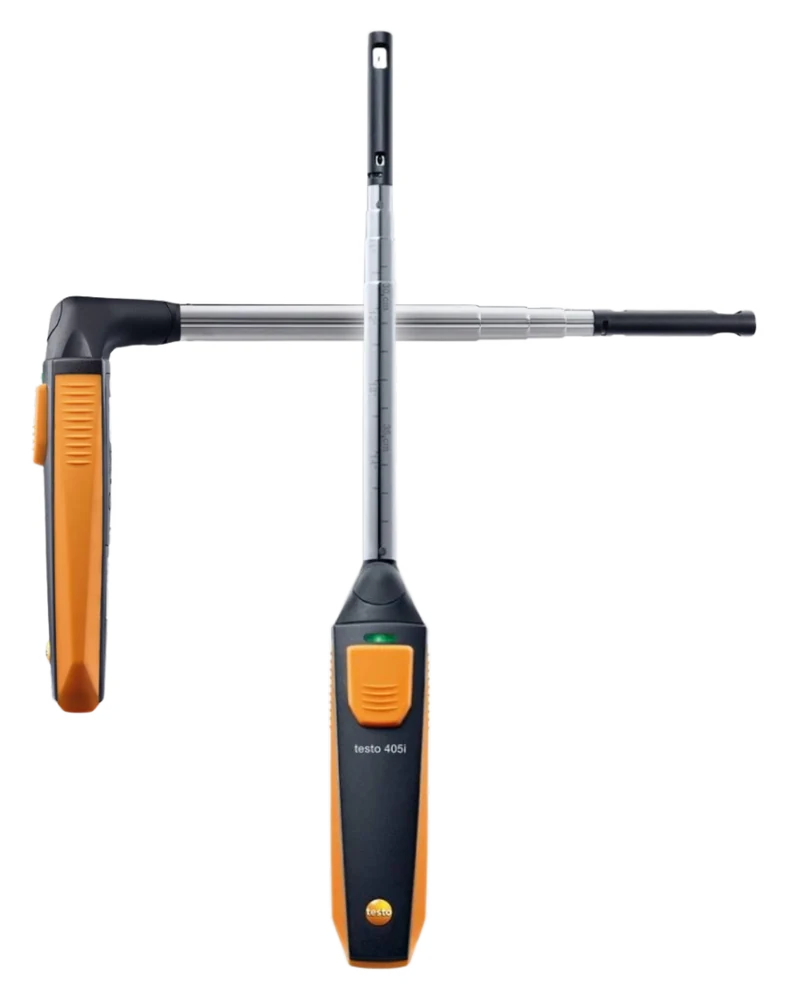
The test uses the Testo 405i, a Bluetooth hot-wire probe on a thin telescoping shaft. measureQuick also uses it for duct airflow traverses. Testo's datasheet lists a resolution of 1.97 feet per minute. It lists low-speed accuracy of ±(20 fpm + 5% of the reading).
Those two numbers describe different things. Accuracy is how close a reading is to the true speed. Resolution is the smallest change the probe reports. The Heat Exchanger Integrity Test does not need the true speed of the air in a cell. It needs to know whether that air changed when the blower started.
The Idea: Tie Cell Air Movement to Blower Current
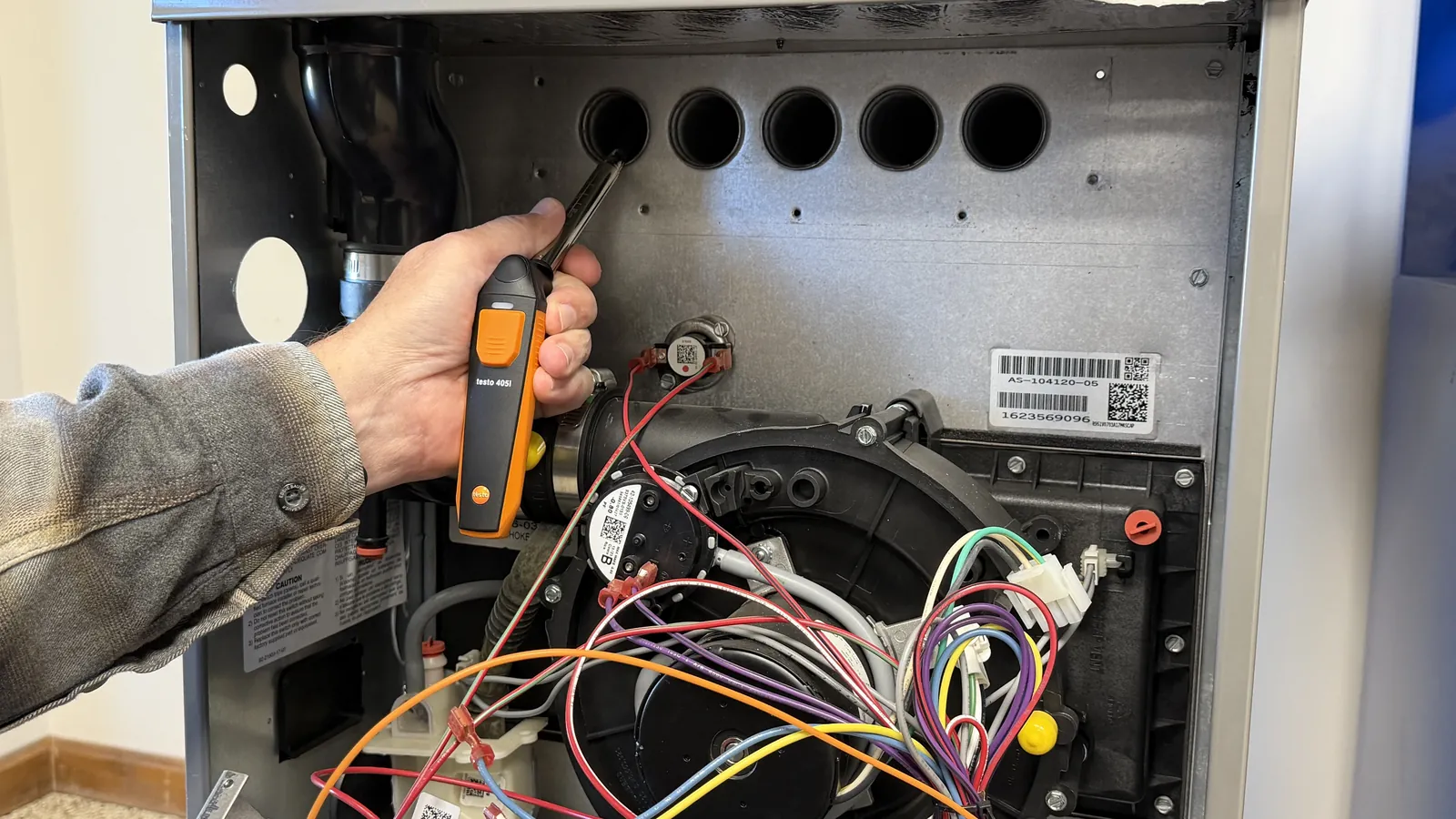
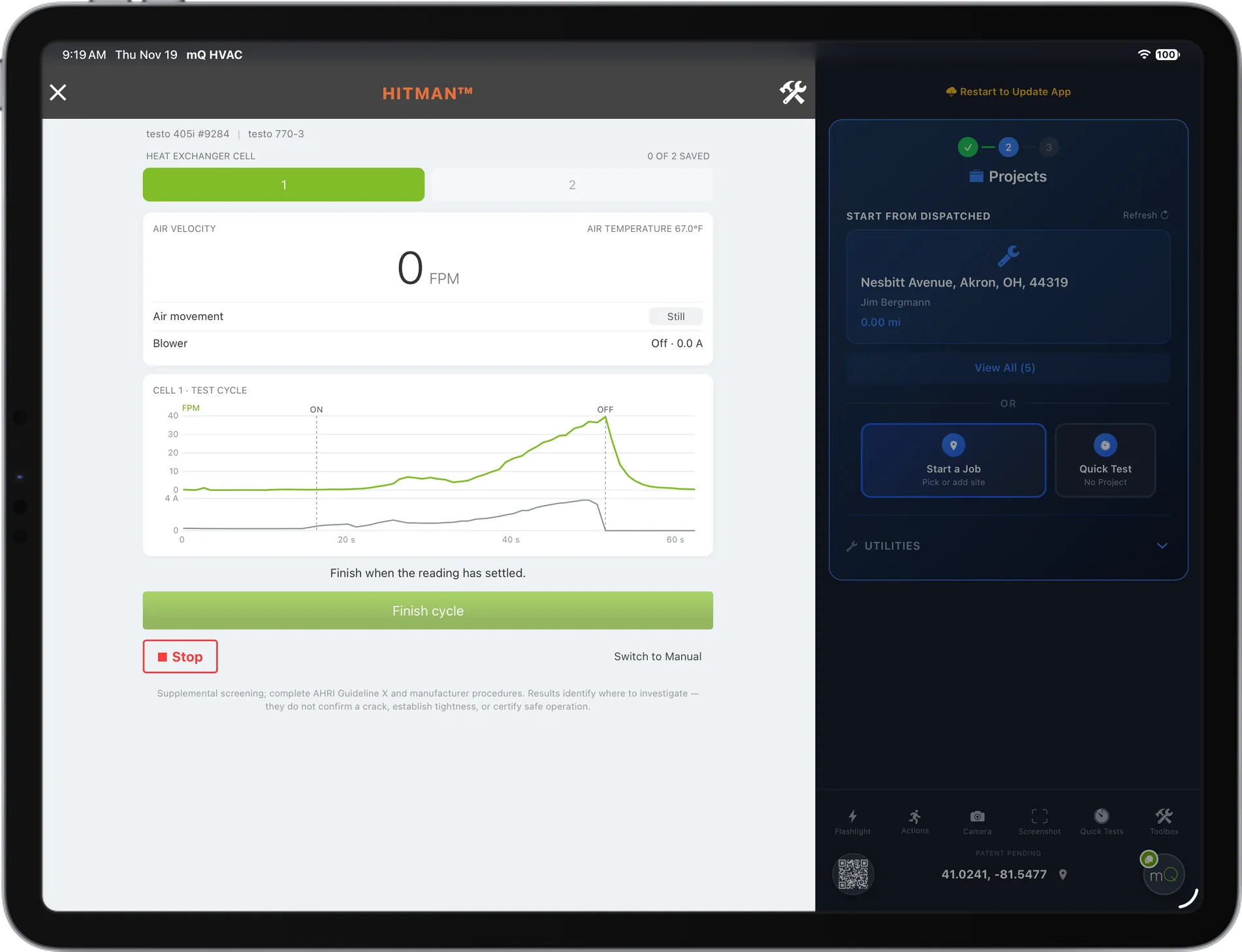
The blower moves air across the outside of the heat exchanger. If the air inside a cell moves when the blower starts, and settles when the blower stops, that cell is worth a closer look. So the test watches two signals at once. With the burners and inducer off, the 405i sits in one cell, angled so the sensor is open to it, and a supported Bluetooth clamp meter reads blower current. measureQuick records the air movement before the blower runs, follows the current as the blower starts and reaches steady speed, then records the air movement again after the blower stops. It shows whether the air in that cell tracked the blower. Then you move the probe to the next cell.
What the Result Means
The app suggests a finding from the trace, and you record one of three for each cell.
Blower-related response detected - inspect further. The air in that cell moved with the blower. That cell needs a closer look. The result points you to a cell. Finding and confirming any defect is still your inspection.
No blower-related response detected. The test did not see air movement that tracked the blower. This result does not clear the heat exchanger. Finish the inspection in Guideline X either way.
Inconclusive - repeat / inspect. The trace was not clear enough to call. Repeat the cycle or inspect the cell.
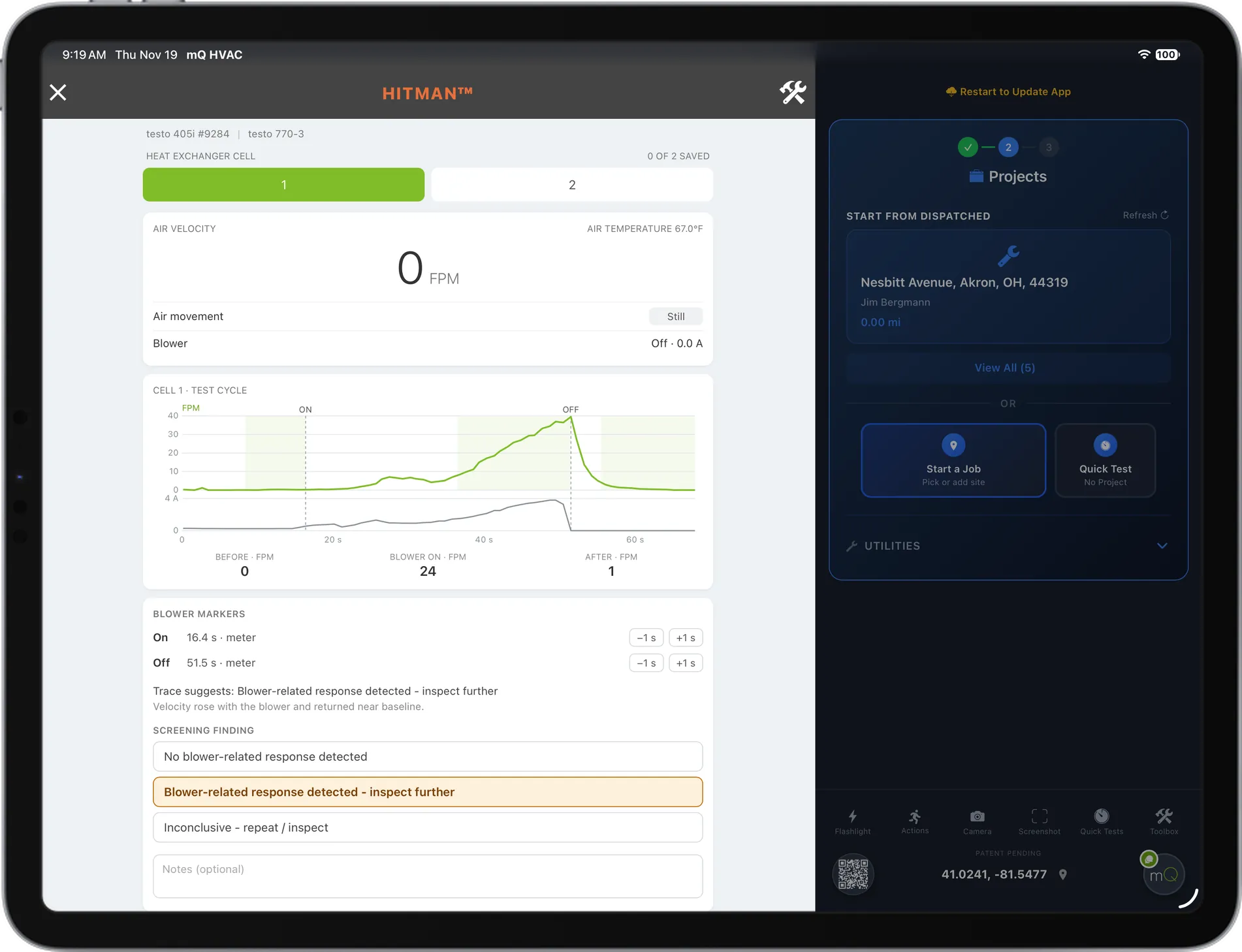
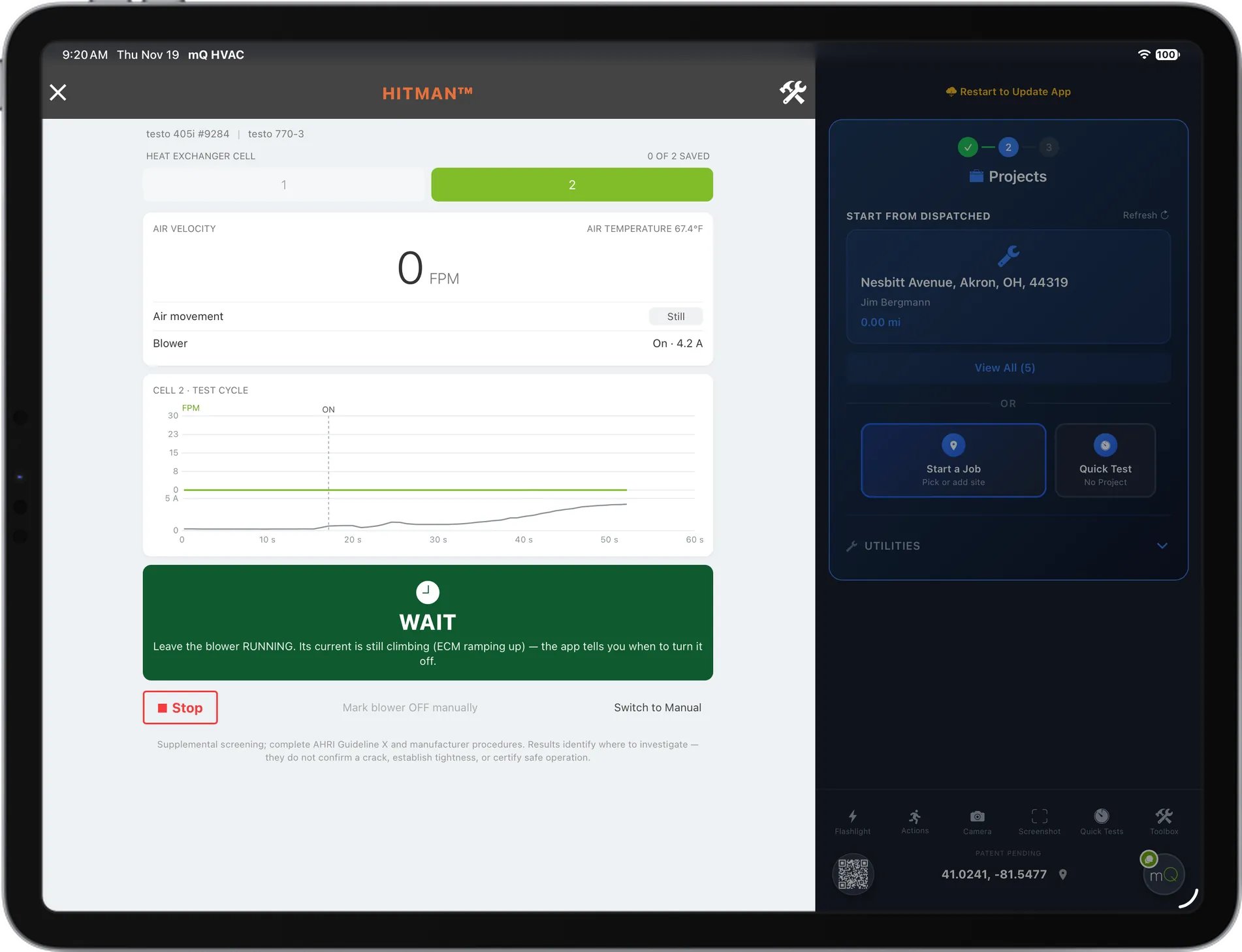
The test screen carries the same caution on every cycle: results identify where to investigate. They do not confirm a crack, establish tightness, or certify safe operation.
Guideline X itself notes that heat exchanger joints are not hermetically sealed, so a small amount of leakage can occur. A blower response is a reason to inspect that cell. It is not a finding by itself.
The test does not replace AHRI Guideline X. It augments the guideline by showing you where to look.
When the screening is done, measureQuick builds a report. It lists the tools used and the result for every cell, with your notes and recommendation. The customer and the technician both sign it. The test identifies the cell to inspect. You confirm any defect by visual inspection, and the report documents what was found and how it was found.
You can hand that report to the customer. If anyone questions the call, another technician can run the same test on the same furnace and compare the result. Jim describes the aim as bringing integrity to the work we do. A heat exchanger call should rest on something another person can check.
A note on the video below. Jim's demonstration uses a new furnace with a screw hole drilled in one heat exchanger cell. A flow grid sits on top to stand in for ductwork. It is a bench demonstration of the method, and we have no field statistics to publish yet.
What You Need
- A Premier Services subscription.
- A Testo 405i hot-wire anemometer.
- A supported Bluetooth clamp meter on the blower: Testo 770-3, UEi DL599, UEi HAC, CPS VOLT-100, Redfish iDVM550, Fieldpiece SC480 and SC680, and the Yellow Jacket YJACK AMP current probe. Jim uses a Testo 770-3 in the demo.
The Heat Exchanger Integrity Test page has the short version for your service manager.
In the app, go to Actions, then Quick Tests, then Heat Exchanger Integrity Test. measureQuick detects both tools when they are connected. Set the number of cells and begin the screening. The Info button on the test screen explains each step.
To get 3.6.5, tap the user icon in the upper left of the app and check for updates. Full release notes: measureQuick Version 3.6 Release Notes.
Watch Jim's Demo
Jim walks through the full test on both cells, from probe placement to the signed report.