
Heat Exchanger Integrity Test.
Know which cell to inspect. The Heat Exchanger Integrity Test (HITMAN™) is a quick test for Premier Services. It screens each furnace heat exchanger cell for air movement that tracks the blower, and the result goes into a signed report. It needs a Testo 405i hot-wire anemometer and a supported Bluetooth clamp meter.

A call your team has to stand behind
Premier ServicesA heat exchanger call can take a furnace out of service. The first step of AHRI's five-step inspection asks the technician to watch the flame as the circulating blower starts. On a compact modern furnace there is very little flame to watch, and two technicians can look at the same furnace and see different things.
When a customer gets a second opinion that disagrees, the first technician has nothing to show for what they saw. The Heat Exchanger Integrity Test adds a measurement to that step, taken cell by cell, and puts the result in a report.
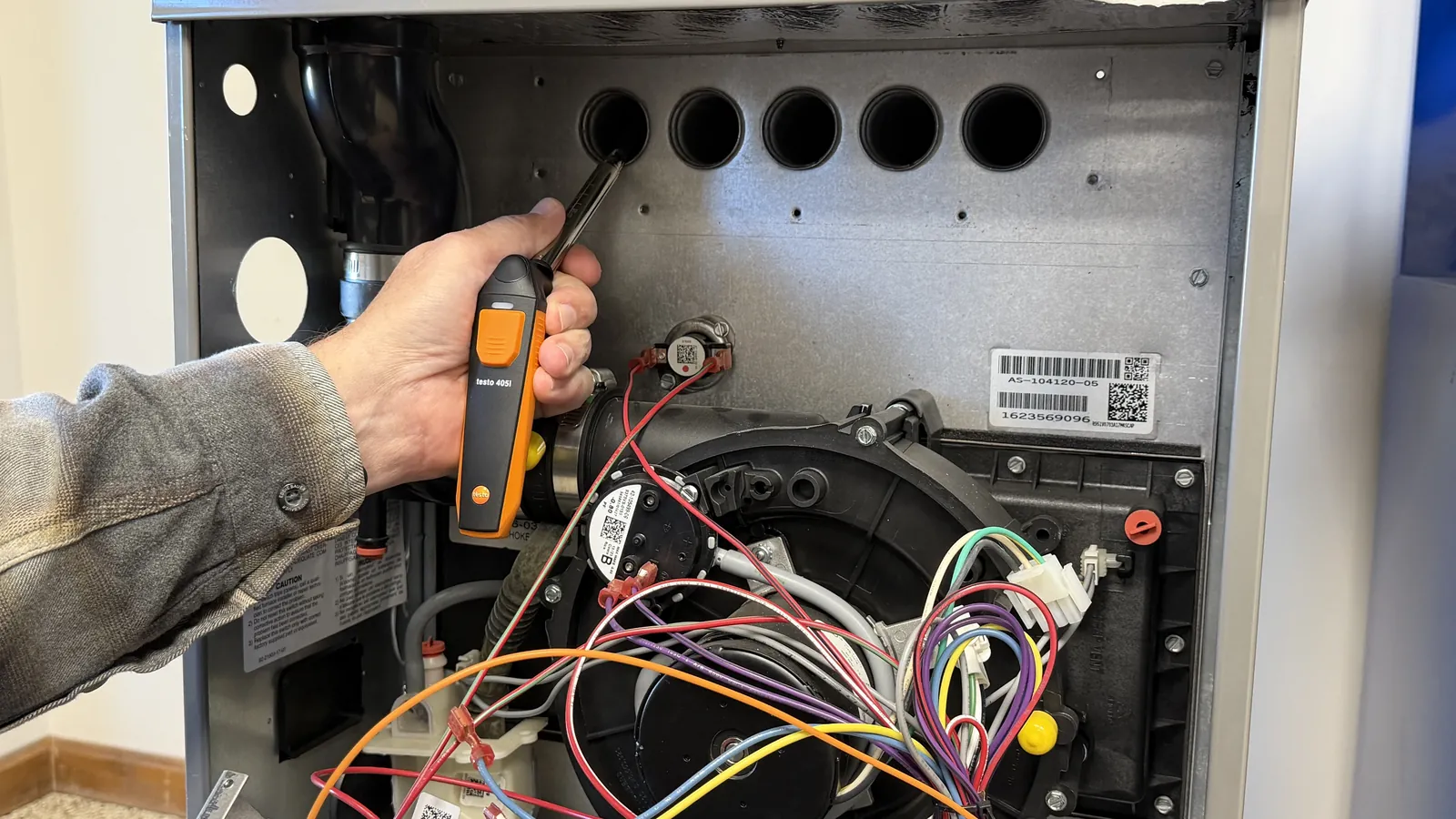
Watch Jim run the test
Jim Bergmann, founder of measureQuick, screens two cells and generates the report.
In this demonstration Jim uses a new furnace with a screw hole drilled in one heat exchanger cell, and a flow grid on top to stand in for ductwork.
How it works
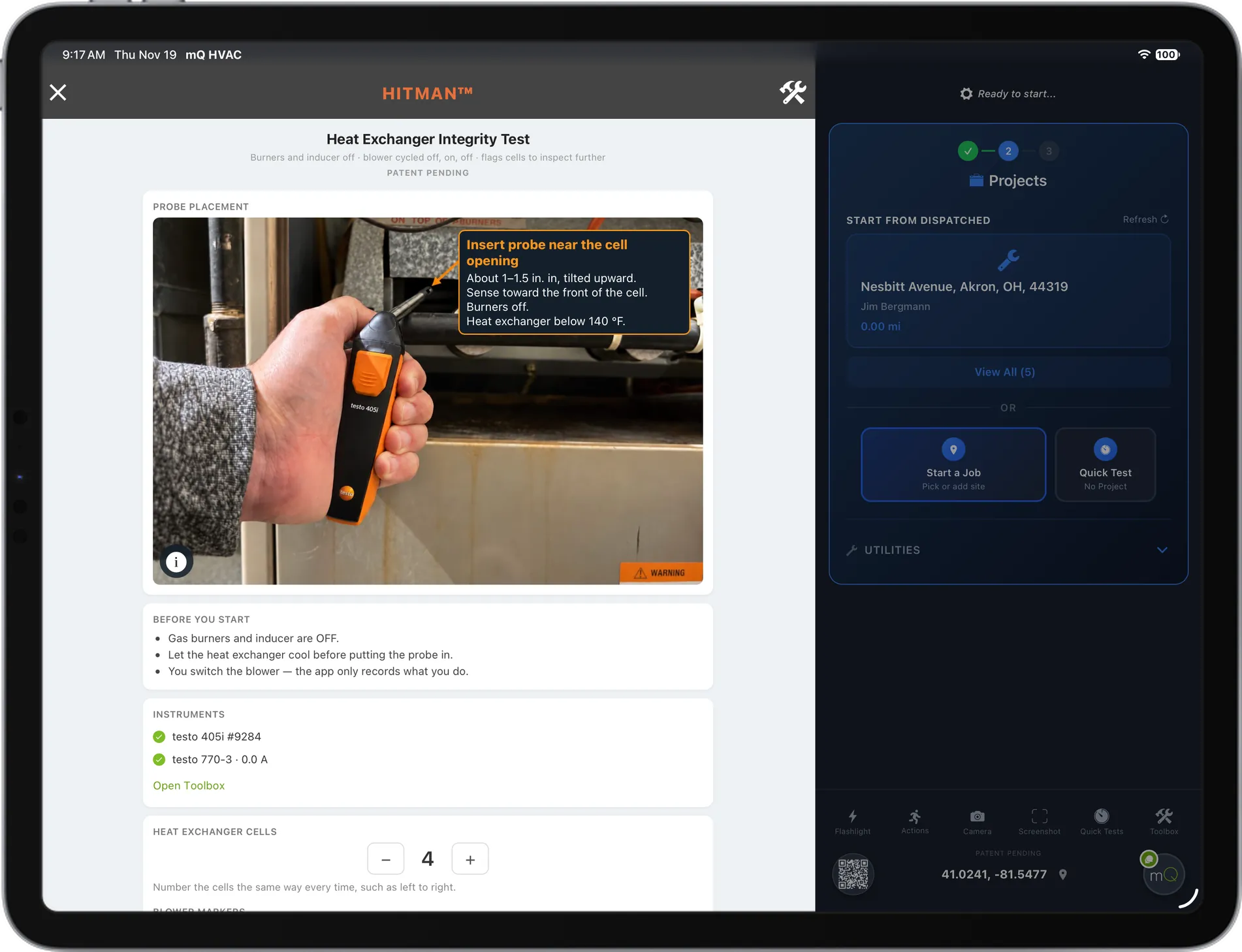
With the burners and inducer off, the technician puts the hot-wire probe into a cell and clamps a meter on the blower. The app looks for a change in cell air movement that tracks blower current, and runs the same sequence for every cell.
- Step 1
Baseline
With the probe in the cell and the blower off, tap Start Cell. The app records the air movement already in the cell, so it knows what to set aside.
- Step 2
Blower on
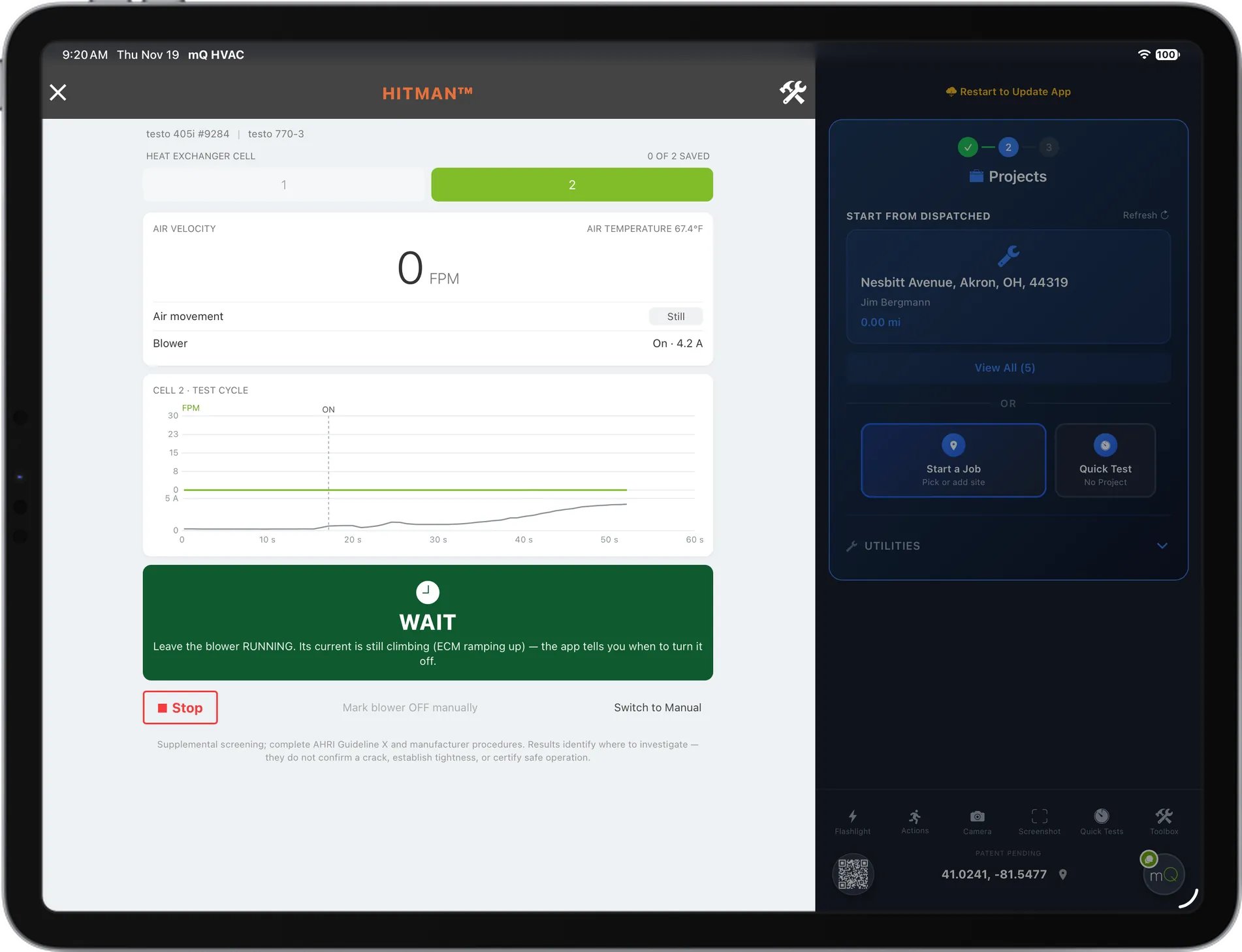
Start the blower. The app marks the moment from the blower current on the clamp meter.
- Step 3
Steady speed
The app watches blower current and tells the tech to wait until the blower reaches steady speed. That includes the ramp on an ECM blower.
- Step 4
Blower off
The app tells the tech to shut the blower off, then takes a second baseline and reports the result for that cell.
What your team needs
| Tool | Role in the test |
|---|---|
| Testo 405i hot-wire anemometer | Sits in the heat exchanger cell, angled so the hot wire is open to the cell, and reads air movement. |
| A supported Bluetooth clamp meter | Reads blower current, so the app knows when the blower starts, when it reaches steady speed and when it stops. Supported meters: Testo 770-3, UEi DL599, UEi HAC, CPS VOLT-100, Redfish iDVM550, Fieldpiece SC480 and SC680, and the Yellow Jacket YJACK AMP current probe. Jim uses a Testo 770-3 in the demo. |
| measureQuick with Premier Services | The test is under Actions, then Quick Tests, then Heat Exchanger Integrity Test. The app finds both tools when they are connected. |
What each result means
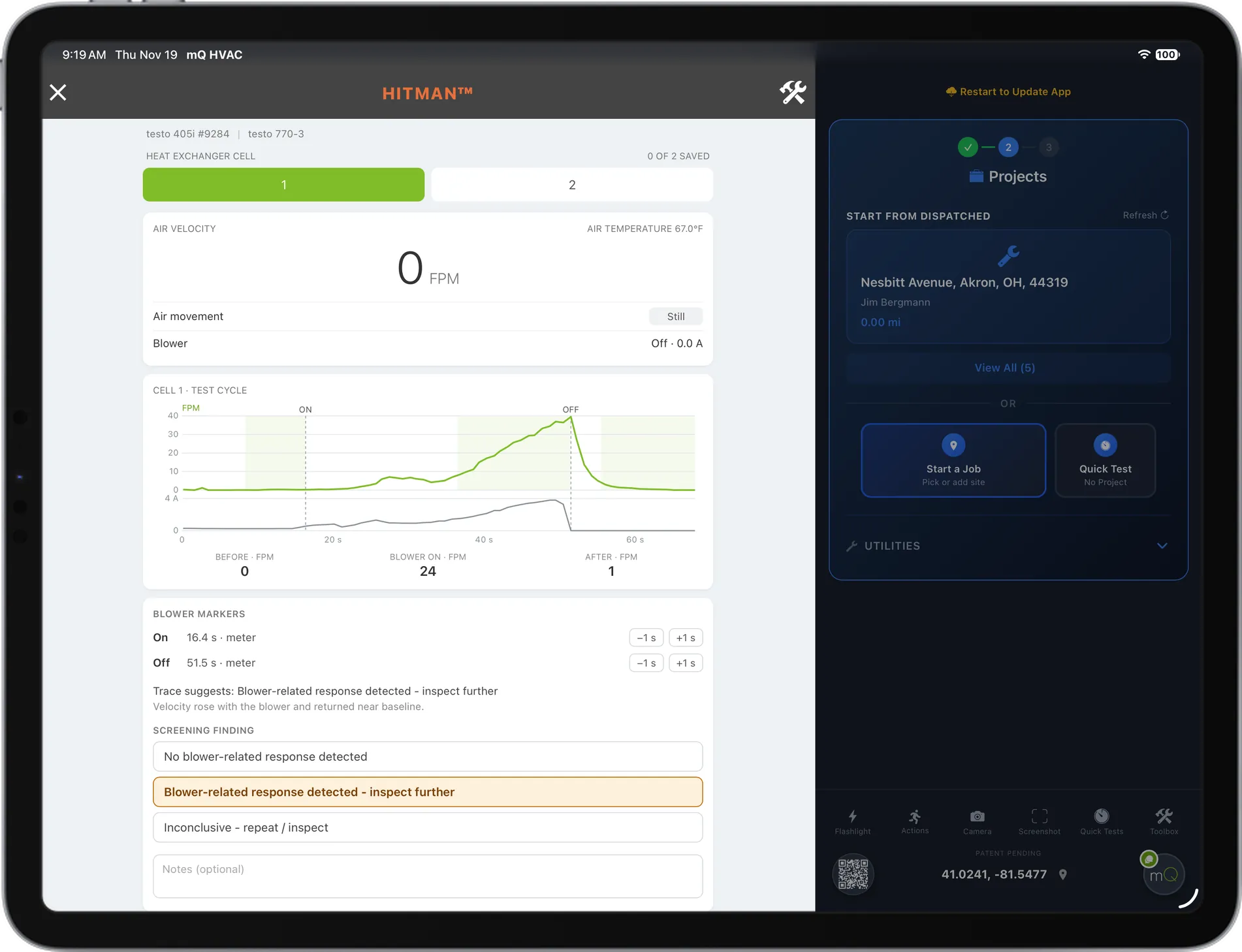
The app suggests a finding from the trace, and the technician records one of three for each cell. It is a screening. In the app's own words, results identify where to investigate; they do not confirm a crack, establish tightness, or certify safe operation.
-
Blower-related response detected - inspect further
The air in that cell moved with the blower. That cell needs a closer inspection. The technician finds and confirms any defect by inspection.
-
No blower-related response detected
The test did not see air movement that tracked the blower in that cell. This result does not clear the heat exchanger. The rest of the inspection in AHRI Guideline X still applies.
-
Inconclusive - repeat / inspect
The trace was not clear enough to call either way. The technician repeats the cycle or inspects the cell.
Beside AHRI Guideline X
AHRI Guideline X is AHRI's guideline for inspecting induced draft furnace heat exchangers, and it is free to download. It stays the procedure your technicians follow.
The Heat Exchanger Integrity Test augments Guideline X. It does not replace it. The test adds a measurement at the point where the guideline asks the technician to watch the flame as the blower starts, and it points the visual inspection at a specific cell.
A report you can hand to the customer
Each screening ends in a report you can hand to the customer. It lists the tools used and the result for every cell, with the technician's notes and recommendation, and both the customer and the technician sign it.
The test identifies the cell to inspect. The technician confirms any defect by visual inspection, and the report documents what was found and how it was found.
The aim is integrity in the work as much as in the heat exchanger. If a call is questioned, the record shows what was measured, and another technician can run the same test on the same furnace and compare the result.
Questions, answered
Does the test replace a visual inspection?
No. It tells the technician which cell to inspect. AHRI Guideline X is still the inspection procedure.
What does "blower-related response detected" mean?
The air in that cell moved with the blower, and the cell needs a closer inspection. The technician finds and confirms any defect by inspection.
Does "no blower-related response detected" mean the heat exchanger is fine?
No. It means the test did not see air movement that tracked the blower in that cell. It does not clear the heat exchanger. Finish the inspection in AHRI Guideline X either way.
What does my team need to run it?
A Premier Services subscription, a Testo 405i hot-wire anemometer, and a supported Bluetooth clamp meter on the blower: Testo 770-3, UEi DL599, UEi HAC, CPS VOLT-100, Redfish iDVM550, Fieldpiece SC480 and SC680, and the Yellow Jacket YJACK AMP current probe.
Does air moving in the room affect the result?
The app takes a baseline before the blower starts and another after it stops, and it looks for air movement that tracks blower current. Keep the probe still and angled into the cell.
How does it handle ECM blowers?
The app watches blower current and waits for the blower to reach steady speed before it asks the technician to shut the blower off.
What is in the report?
The tools used, the result for each cell, the technician's notes and recommendation, and the customer and technician signatures. You can hand it to the customer.
Is the test endorsed by AHRI?
No. AHRI publishes Guideline X. measureQuick built the test to add a measurement to that inspection.
Where is it in the app?
Under Actions, then Quick Tests, then Heat Exchanger Integrity Test.
Which plan includes it?
Premier Services. The Heat Exchanger Integrity Test is a quick test for Premier Services subscribers.
Keep exploring
Put a measurement behind the call.
Real-time diagnostics on 80+ tools across 17+ brands are free forever. Premier Services is $49 per user per month.